Fort Siloso: History 1946 - HMS Sultan

HMS Sultan 1946 - David Etheridge
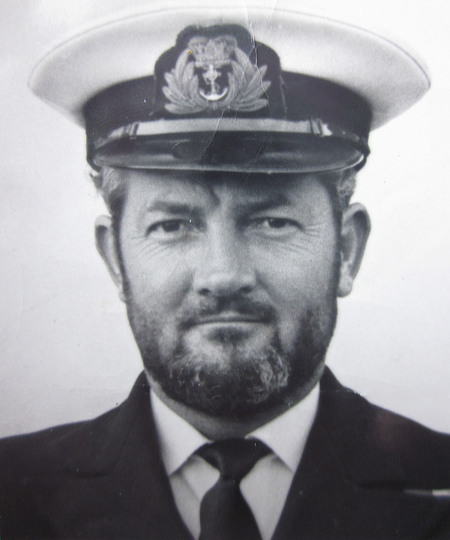
David Etheridge
From Robin Etheridge: I came across from my late fathers (Inst.Lt. Cmdr D.F. Etheridge RN) papers. He was a lieutenant at HMS Sultan in 1946 after Singapore was re-taken, and being the most junior officer was detailed with looking after the surrendered Japanese POWs. He was responsible for setting up the education centre, being one of the few officers with EVT (Education, Vocational & Trade) certificate. Whilst there he was given two paintings done by the a Japanese POW.
Blakang Mati 1946
I had to take the seaman-like precaution of leaving 1s and 6d for the Kelleck (Leading Seaman) of my mess to send me a telegram to the Union Jack Club London in case the draft came through to me in the mess. Sure enough, a telegram arrived on a Saturday night and I was back on board by midnight Sunday. On the way back in the train I was philosophical about my change in luck and mused that I had worked the system to my advantage and Fate had finally closed in on me – I really couldn’t complain.
On the Monday morning I had discovered I had been removed from the Foreign Service Spare register and my course as an educational instructor had at last come through. I understood it was the second such course, enjoyed a further 10 days’ foreign service embarkation leave after my 4 weeks training. Lady Luck once again had smiled on me. All the first instructors were drafted to UK billets. I was the first such one to be sent abroad and with the superior rank of Leading Seaman. On arrival in Ceylon (Sri Lanka) nobody out there knew whether I was fish, flesh or good red herring. I was able to continue to manipulate the system to my advantage. If I liked to perform as a superior seaman I would do so and not let on that I was really a dread educationalist. I became a Coxswain of landing craft and skipper of an MFV (Motor Fishing Vessel adapted as a patrol, support or auxiliary craft) in the Gulf of Bengal. However, as in the past my papers eventually caught up with me. I was sent as an EVT instructor to a combined operations base in southern India and my swashbuckling days suddenly came to an end. I could now relax and slip into khaki and keep a low profile until “it” happened again.
The First Lieutenant of HMS Tengra summoned me to his office and eyed me sternly. “I have just gone through your papers and discovered that you are an Upper Yardman” he accused. “But I am an EVT instructor”. “If I say you are still an Upper Yardman then you have to take it that you are and you will remain an Upper Yardman – you should be proud of it, I recommend you don’t argue about it with a superior officer. Is that understood? From this day on you will take the morning muster and in full naval white uniform, not that combined ops hermaphrodite rig you have assumed” he said.
I honestly thought that my upper yardman status had lapsed and was staggered that this millstone lacked the capacity for becoming detached from my neck even at a distance of 10,000 miles from where it had been conferred.
I eventually joined the destroyer HMS Contest for passage to Singapore, a shore establishment called “HMS Sultan”. I forgot to tell you that whilst I was playing about in Ceylon and India our allies dropped a couple of bombs on Japan and the war ended and I was required to set up the education centre at HMS Sultan.
The Japanese had only surrendered a few weeks before and I was instructed to humiliate them on any and every available opportunity. This was to impress upon them the beastliness of their recent behaviour.
At the same time, these recommendations included the caveat not to lay about them physically. Thus the humiliations suggested included ignoring their leaders when they were reported for work — the Japanese always bowed to the waist and did not regain an upright stance until recognized. Thus the technique involved only recognizing their existence after 5 or so minutes, leaving the equatorial sun to beat down on their necks and backs, generally to treat them as barely human.
From the outset I doubted if this treatment had any effect as, before surrender, their officers had treated them like this anyway, including physical punishment. In fact, the average Japanese prisoner considered it must be some strange accidental omission in our psyche that we declined to lay into them. As culturally the Japanese were much more courteous than us and certainly substantially more hygienic they could but regard us, en masse, as rude, smelly people, with a marked predisposition to laziness. Thus I found, in my case, the intent of the British military administration to implant kindly, reasonable, liberal behaviour in their prisoners totally counter-productive. I found it humiliating to be dirtier and less polite than my charges.
Give a British sailor 10 minutes break and he will sit under a palm tree and go to sleep or smoke a cigarette. Give a Japanese sailor the same and he will make haste to the nearest available clean water, strip down to his fondoshi (g-string) and wash himself from head to foot. My fellow sailors used this permission to exercise excessive verbal abuse to their defeated charges. I became progressively more polite, returning their bow in the English fashion that is not to the waist – a sort of exaggerated nod.
On one occasion a petty officer witnessed that I bowed back to a Japanese officer and approached me with the words “You should not kowtow to these little yellow bastards”, to which I replied, “To the Japanese, to acknowledge a bow with a bow does not convey submission, the rules of the game are that the inferior bows first and it is incumbent on the superior to respond and, if anything, it reinforces his superior status”.
“Well, don’t let me catch you doing it again!”
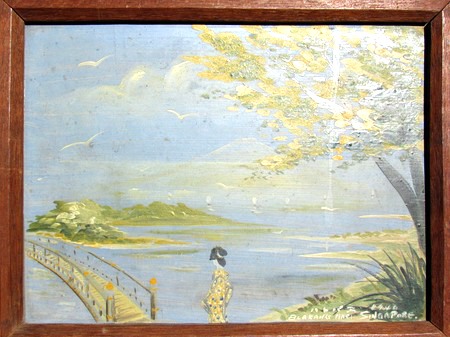
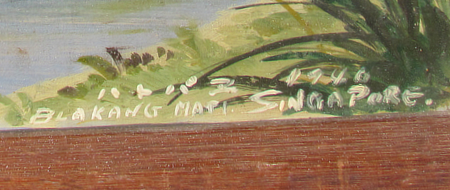
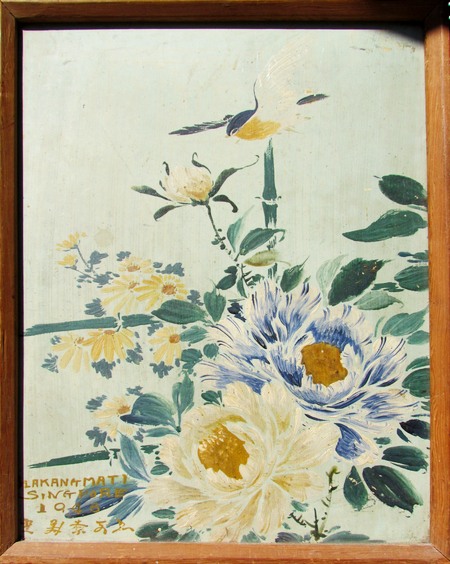
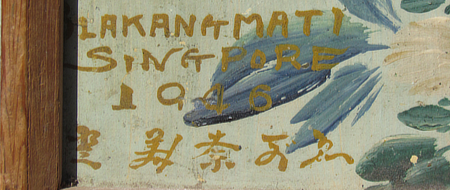
Paintings by a Japanese POW
I also made sure when receiving Japanese POW’s that I was always smartly dressed, shoes shining and uniform spotless. To the oriental, face is everything. There is nothing the Japanese does not notice in the demeanour of his master. I did not need the threats of my first lieutenant to smarten myself up!
The Japanese admire suffering seemingly for suffering’s sake. If I cut my finger with a chisel, it was necessary to ignore it and let I bleed for a few minutes never to show pain, or indeed emotion, and then order someone else to attend to the wound with calculated detachment. If you acquire face, you acquire authority. If you show weakness you have nothing.
I increasingly began to admire the culture of our ex-foes so that instead of me inculcating this in them I was adopting their standards. I admired their automatic respect for obedience, absolute personal trustworthiness, and quaint stoicism, and industry, loyalty to their Emperor, fatalism and ability to adapt to any changing environment. Perhaps most of all I admired the fact that they never seemed to whinge about anything. The prisoners were ex-naval personnel and when I had learned sufficient Japanese to communicate with them, sensibly, I had long conversations in a sort of language that evolved on the island. It was likely to switch at times into Malay and English as we discussed Japanese religious beliefs, the Samurai, the imperial family, attitudes to sex, respect for their elders (a number of allied prisoners owed their lives to the fact that they had grey hair). We also discussed the Kamikaze pilots. Don’t get me wrong, the Japanese, from time to time, were capable of making mistakes and one of them was attacking the Americans at Pearl Harbor.
Two hundred years before, a group of acquisitive Malay pirates made a lucrative living plundering the vessels of the British East India Company, in the Straits of Singapore and Malacca. Ships were compelled by geography to “run the gauntlet” of the pirate infested waters. The island immediately south was called Pulau Brani (island of the brave), the adjacent island (even closer to the pirates) was named Pulau Blakang Mati “The Island Beyond is Death”. After the fall of Singapore, in 1945, the RN commandeered the island and used it as a naval shore establishment.
HMS Sultan contained 250 Japanese prisoners of war (who were paid one farthing a day, so as not to be considered “slaves”). The island also contained 200 RN sailors, nurses, Japanese (largely Shintoists and some Buddhists), a straits-born Chinese village whose inhabitants spoke Malay, and an ethnic Chinese village, who spoke Cantonese and practiced Confucianism. The police were Sikhs who spoke Punjabi, the personal servants were Malays who were Muslims, those who trimmed the verges along the roads were Tamils and were Hindus, and the silversmith was a Singhalese and was a Buddhist. Such an odd mixture of races and religions probably never came together before.
Because an education centre had to be set up from scratch, I spent much of my time with the Japanese. I had heard a rumour that somewhere in the labyrinth of passages in the honeycomb of Mount Serapong there was a case of Japanese Samurai swords but I never found them. There were plenty of bombs with the fuses taken out of them so I had to proceed with caution.
I acquired four important possessions from sailors who returned to the UK:
1. A submarine two man canoe
2. A Japanese slave
3. A monkey
4. Several sheets of weather resistant plywood
I converted the canoe into a sampan and used it on my many self-arranged days off. My “slave” Tsuki Chuuichi Hezo went with me to drag my canoe to the shallows. I would hand him my naval pay book, a photo of my girlfriend and 25 Singapore dollars in cash and tell him he was to help me with the boat when I returned at 5 p.m. At that time he would do so, always faithfully returning my belongings, and there was no need to count the cash.
The female monkey was from Australia and was not adverse to attacking people. She would eat anything I ate; a monkey knows instinctively what wholesome food is. Taking her through the jungle was useful as she picked mangos (my favourite fruit) from places I couldn’t reach. She could be very destructive, dropping book after book onto the floor. She hated being bathed and made such a fuss that I used to put the task off if I could, as I had some sympathy for her. I gave her away on my draft back to the UK.
I started a production line making suitcases out of the unwanted plywood. Sailors were issued with small, inferior attaché cases made from compressed cardboard which did not survive long in the tropical climate. They were thrown out in large numbers and so I used their stout corner pieces, leather handles and metal locks. A team of six Japanese made up the cases and sold them for five Singapore dollars each. They were much more robust, spacious and attractive! One day my boss, a naval Lieutenant Commander, summoned me to his office and said, “I understand that you are running an attaché case manufacturing racket”.
I said nothing, taking exception to his use of the word “racket” and stood to attention expecting to be reprimanded. But all he said was, “If you continue this enterprise you’ll have to cut me in and as I am the boss, I’ll have half the profits”. I paid the Japanese in cigarettes as money was no use to them. My boss did nothing for his half and had treble my pay which rankled, so I wound the business up. I still have the last two suitcases that were made.
The climate was hot and humid therefore the sailors were stripped to the waist showing their tattoos. Some had a representation of the crucifixion on their backs. In the nineteenth century, if the boatswain was Christian he would not lash a sailor with this tattoo and the tradition remained even though the sailors were not necessarily aware of its origins. These men generally lay on their bunks during the afternoon either sleeping or bemoaning their misfortune at not being home and discharged from the service now the war was over.
When I ventured on one of my forays into the jungle I preferred to take petty officer Tanika with me rather than any comparable English men who were prepared to accompany me. The RN included officers referred to as schoolmasters. My schoolmaster boss admitted to me he couldn’t teach the subjects I taught and that he would handle all the administration if I undertook all the teaching. This suited me down to the ground. I arranged to only work 4 days a week, spending the rest of my time sailing my sampan in the straits of Singapore or going exploring. My EVT course had offered the opportunity of a commission in what was now called the instructor branch. My first year as an NCO hadn’t made my mind up whether to go back to architecture or engineering, stay in the navy or become a Lloyds underwriter